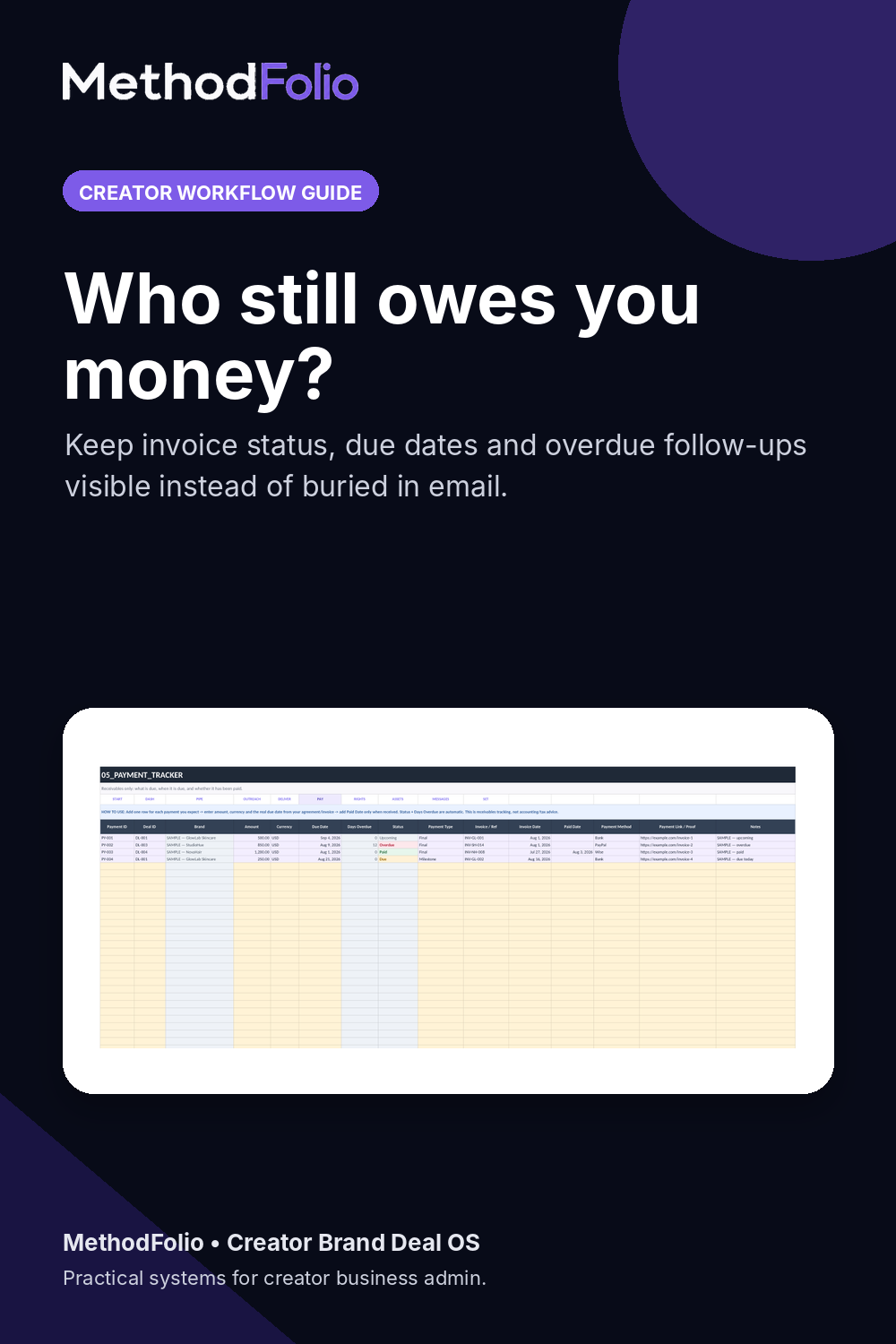
Track the amount and the payment terms
Start with the agreed fee, invoice date and payment due date. If the deal has split payments or milestones, record the payment structure clearly enough that you can tell what is still outstanding.
Do not rely on an email search as your accounts-receivable system.
Use payment states that describe reality
Simple states such as Upcoming, Due, Overdue and Paid are easier to operate than a long list of ambiguous labels. The point is to make the next action obvious, not to recreate accounting software.
Log the follow-up instead of trusting memory
When you send a payment reminder, record the date and the next follow-up date. That prevents duplicate messages and keeps you from wondering whether you already chased the invoice last week.
A reusable message library can save time, but the message should still be checked against the actual deal and payment history before sending.
Close the loop when money arrives
When payment is received, update the record immediately. A clean paid state is useful later when you review brand history, compare past deal terms or decide whether a relationship is worth pursuing again.
Keep the operating facts together.
See the payment tracker and follow-up workflow inside Creator Brand Deal OS.