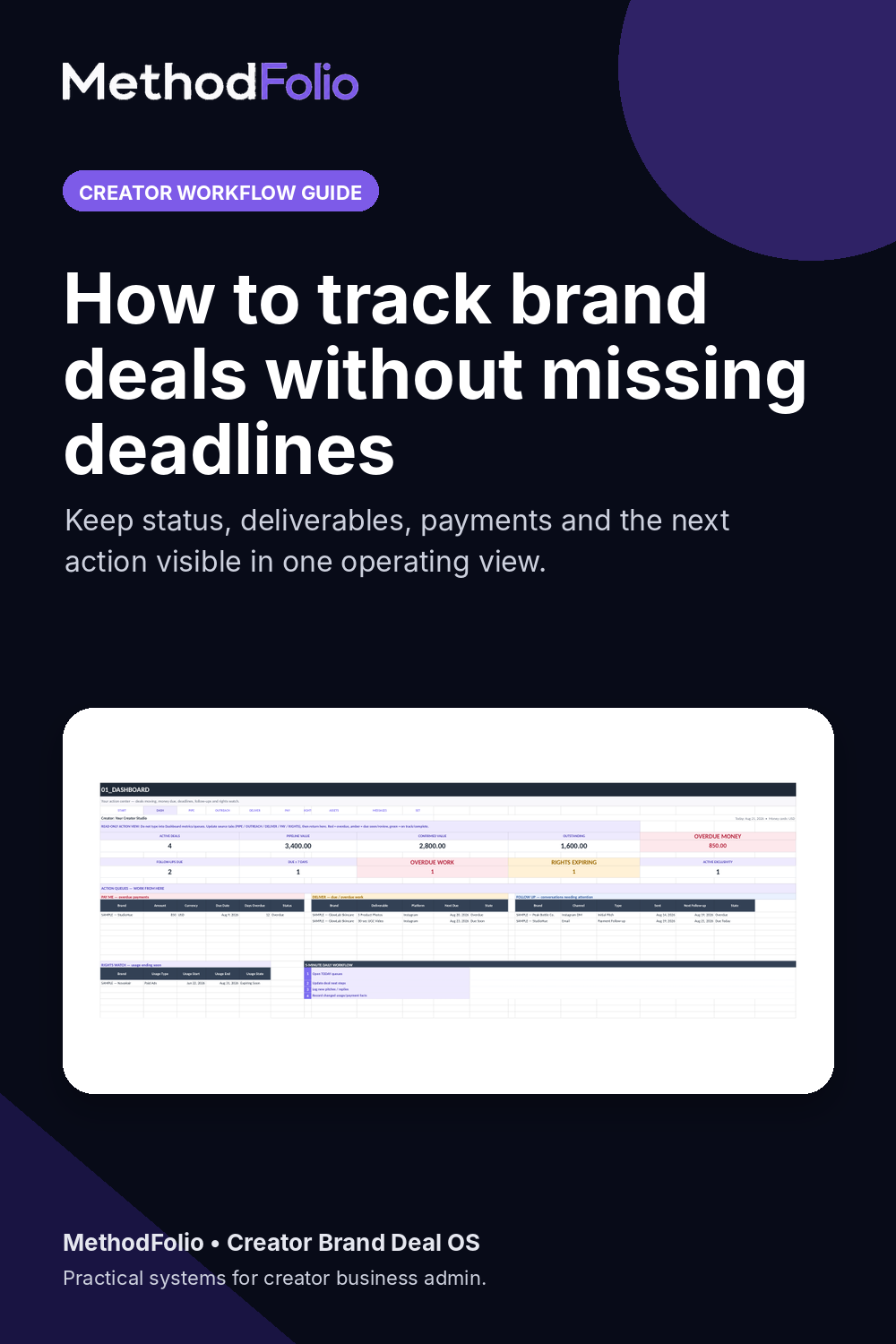
Start with one record per brand deal
Give every collaboration one row or record with the brand, deal status, agreed fee, next action date and the link back to the source conversation. The goal is simple: you should be able to answer “what happens next?” without reopening five apps.
If a deal changes, update the record rather than creating a second version in Notes or a new spreadsheet. One source of truth is more useful than a perfect-looking dashboard with stale information.
Separate the deal from the deliverables
The deal is the commercial relationship; deliverables are the individual pieces of work inside it. A single brand collaboration can include multiple videos, draft dates, posting dates and approval states.
Tracking deliverables separately makes it easier to see what is due soon without losing the overall commercial context of the deal.
Keep payment state visible
Do not treat “content delivered” as the end of the workflow. Record the expected amount, invoice/reference, payment due date and paid date. A simple payment view should make recorded overdue amounts visible before you need to search your inbox.
This is operational tracking, not accounting software. Confirm financial records against your invoices and payment provider.
Use one next-action date
A deal can have many dates, but your daily workflow needs one clear next action: follow up with the brand, send the draft, issue the invoice, check payment or review rights. A next-action field prevents active deals from disappearing just because there is no immediate content deadline.
Keep the operating facts together.
See how Creator Brand Deal OS keeps deals, deliverables, payments and rights connected in one Google Sheets workspace.